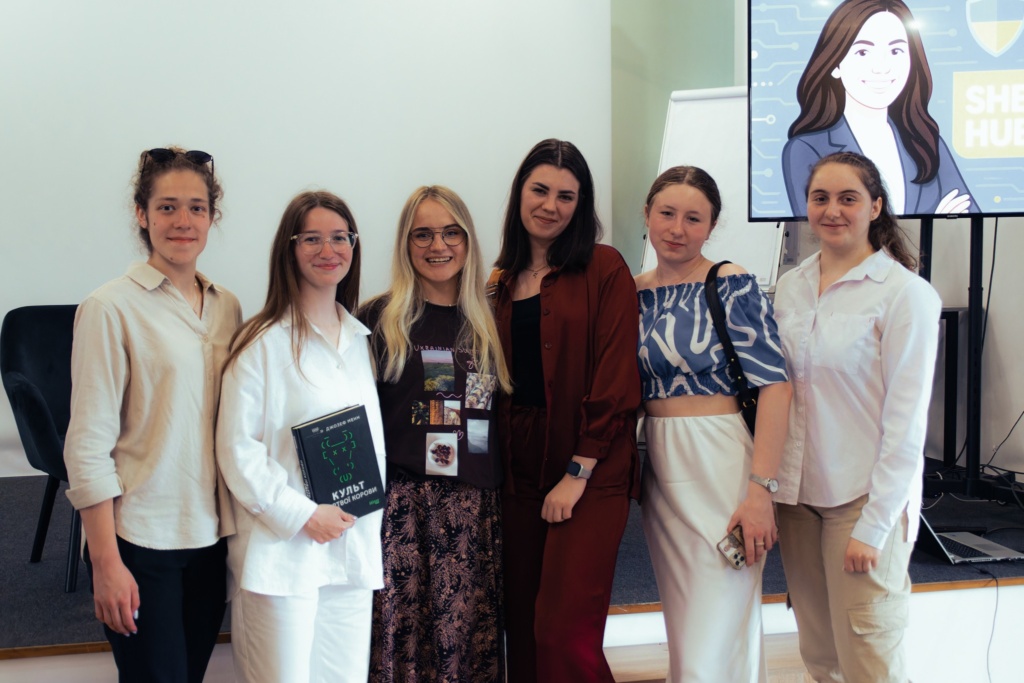
At the latest SheCyber Hub event, participants spoke with Ksenia Yamburg, a Malware Research Engineer at MacPaw (Moonlock). The conversation focused on practices of malware analysis, attack deconstruction, adversary infrastructure research, and the daily routine of a security specialist working with darknet data.
“In the morning, I don’t open a news feed—I open my laptop and look at darknet news. In a researcher’s work, the main thing is daily monitoring,” noted Ksenia.
The speaker emphasized that the darknet is a working environment that requires dedicated infrastructure, adherence to anonymity protocols, and constant caution: one wrong click can reveal a researcher’s identity. Monitoring tools exist but are often expensive, so beginners should master manual monitoring and process discipline.

Key points from Ksenia Yamburg
- Vigilance and being first. In research, it is important to be first not for the sake of competition, but due to the willingness to dig deeper and earlier than others.
- Balance of hard and soft skills. Technical skills are critically important, but without the ability to communicate one’s conclusions clearly, their value is reduced by half—especially for engineers.
- Cybersecurity is about action. Each day, choose not to hide but to act; not to be silent but to speak; not to be afraid—and to move forward.
- Anonymity is a core competency. Controlling what and how is disclosed externally must be a continuous process.
- Code has “fingerprints.” Code often retains names, emotions, and sometimes even obscene language. Such “traces” can tell more than the tool itself.

Women in cybersecurity: confidence and community
A separate part of the discussion was devoted to women’s participation in the cyber industry. Among the most common barriers is the fear of “not looking smart enough” or asking a question that seems “too obvious.”
At industry conferences, a representation imbalance is still noticeable: hundreds of men and only a few dozen women.
Many girls avoid asking questions so as “not to distract” or “not to take someone’s time”—this is a mistaken strategy that holds back development.
The cybersecurity community is generally open: support and mentorship are found almost always if you dare to ask.
Ksenia also shared her own way of maintaining balance in a high-stress job—namely, time away from the screen and the responsibility of a large dog, which helps maintain rhythm and resilience.

About the speaker
Ksenia Yamburg is a Malware Research Engineer at MacPaw (Moonlock). She specializes in malware analysis, adversary infrastructure research, attack deconstruction, and operational threat monitoring, including in the darknet.